
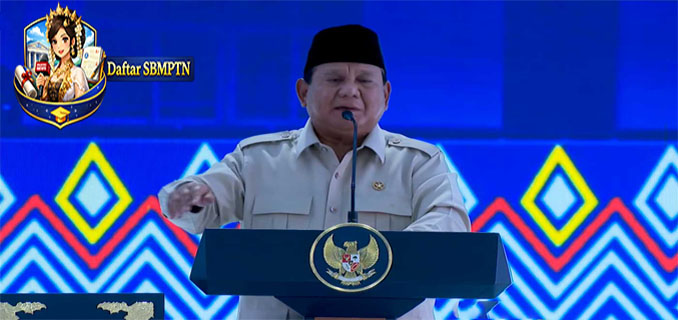
Daftarsbmptn.com – Indonesian President Prabowo Subianto’s firm stance against corruption has once again drawn public attention. In a number of public statements, Prabowo emphasized that a person’s honor is not determined by education or position, but rather by honesty and a legitimate way of earning a living. These statements have garnered widespread attention because they are seen as reflecting the direction of national leadership, which places integrity as a primary foundation.
Prabowo openly criticized the behavior of elites who abuse their intelligence and power for personal gain. He stated that he respects ordinary people who work hard and honestly more than those with higher education who engage in corrupt practices. This message is considered powerful because it touches on a fundamental issue that has long been a long-standing problem in governance: systemic corruption.
Political observers believe that Prabowo’s stance is not merely rhetoric, but rather a political signal seeking to strengthen moral standards in government. By placing honesty and legitimate work as core values, Prabowo is seen as attempting to build leadership legitimacy that supports ethics and the public’s sense of justice. This also serves as a moral message to state officials to refrain from abusing their official mandate.
Amidst global economic challenges and the need for bureaucratic reform, the issue of integrity is gaining increasing public attention. Many people view corruption as a major obstacle to development, as it undermines public trust and widens social disparities. In this context, Prabowo’s strong statement is seen as aligning with the aspirations of the people who want a clean and decisive government.
Public response on social media has been varied, but the majority expressed appreciation. Netizens believe the statement reflects the concerns of the common people who feel victimized by elite corruption. The narrative of halal work and honor is considered relevant to the cultural and religious values entrenched in Indonesian society.
On the other hand, some have cautioned that a tough stance needs to be accompanied by concrete steps. Consistent law enforcement, policy transparency, and strengthening oversight institutions are key to ensuring this moral message remains a symbol. The public awaits concrete policies that demonstrate that the fight against corruption is being carried out impartially.
Governance experts note that leadership that emphasizes honesty has a long-term impact on bureaucratic culture. If this message is translated into a clear system of rewards and sanctions, state officials will be encouraged to work professionally and responsibly. Investor confidence and economic stability are also believed to increase along with an improved government image.
On several occasions, Prabowo has also emphasized that national development should not be built on fraudulent practices. He believes that economic progress must be in line with social justice and ethics. Hard work, innovation, and dedication are considered the main paths to achieving shared prosperity.
With his tough stance against corruption, Prabowo is attempting to build a leadership narrative rooted in moral values and a commitment to the people. Whether this narrative will be consistently realized in policy and law enforcement remains a significant challenge under constant public scrutiny. However, one thing is clear: the message of honesty and legitimate work is now firmly established as a crucial foundation for national leadership.
I’m very happy to read this. This is the type of manual that needs to be given and not the random misinformation that’s at the other blogs. Appreciate your sharing this best doc.
Mình đánh giá 188v com khá cao vì tốc độ tải ổn định. TONY06-25
Mình khá thích giao diện của netmirror .com vì nhìn gọn gàng và hiện đại. TONY09-03