
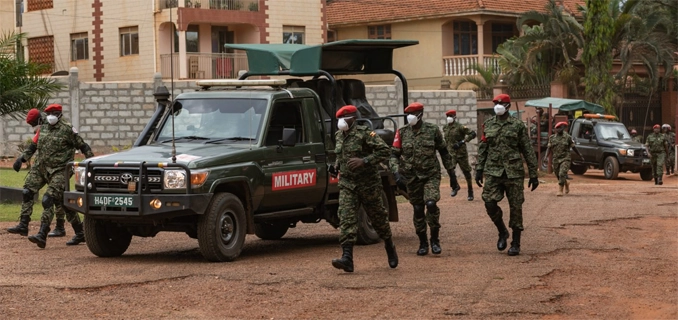
Daftar Sbmptn – Amnesty International Indonesia believes that granting amnesty in a number of cases does not automatically resolve fundamental problems in the Indonesian legal system. The human rights organization highlights that military justice practices are still frequently used as a political instrument, potentially threatening the principles of justice and the rule of law.
This criticism has been further strengthened by the emergence of a number of cases involving military personnel, including alleged violence against civil society activists. Amnesty believes that handling these cases through military justice actually increases the risk of impunity and undermines public trust in law enforcement.
In its latest report, Amnesty emphasized that military justice should be limited to internal violations, such as soldier discipline. However, in practice, this mechanism is still used to handle general crimes committed by military personnel.
“The use of military justice outside the context of internal violations opens up room for intervention by power and political interests,” stated one point of criticism.
This focus was highlighted in the handling of the violence against human rights activist Andrie Yunus. Amnesty, along with several civil society organizations, assessed that the legal process in this case was fraught with irregularities and potentially influenced by non-legal interests.
Amnesty International Indonesia’s Executive Director, Usman Hamid, stated that the state should ensure that all general crimes, including those involving Indonesian National Armed Forces (TNI) personnel, are processed through general courts. This aligns with the mandate of security sector reform and the principle of equality before the law.
“The state must process these cases in general courts, not military courts,” he emphasized in an official statement.
According to Amnesty, the use of military courts in civilian cases is not merely a technical legal issue, but also concerns the direction of democracy. When the military has its own judicial system for general criminal cases, it creates the potential for conflicts of interest and a lack of transparency in the legal process.
The civil society coalition also believes that this practice perpetuates impunity. In several cases, verdicts handed down in military courts are considered to not reflect a sense of justice for the victims.
Furthermore, the military justice system is considered less transparent than general courts, making public oversight difficult. This raises concerns that the legal process could be influenced by command structures or institutional interests.
“No citizen should be given privilege before the law,” the civil society coalition stated in its call for security sector reform.
Amnesty also highlighted the increasing role of the military in civilian spaces, including legal proceedings. The presence of military personnel in civilian courtrooms, for example, is considered to create psychological pressure and undermine judicial independence.
In one previous case, Amnesty even called the military’s presence in the courtroom a form of intimidation that is inconsistent with the principles of a free and fair trial.
This phenomenon is seen as part of a broader trend, namely the reinvigoration of military influence in the civilian sphere. Some have called this a setback for the reform agenda championed since the post-1998 era.
On the other hand, the government has stated its commitment to ensuring a transparent legal process. In the Andrie Yunus case, for example, the government claimed to be pushing for an open trial, although the judicial mechanisms used remain a matter of debate.
However, Amnesty believes these steps are insufficient. Transparency in trials will be meaningless if the justice system itself still faces fundamental problems, particularly regarding independence and accountability.
Amnesty emphasizes that military justice reform is an urgent agenda that cannot be postponed. Without such reform, various law enforcement efforts, including granting amnesty, will only be temporary solutions that fail to address the root of the problem.
The organization also warns that the existence of a differentiated justice system for certain groups has the potential to undermine the principle of equality before the law. In a democratic state governed by the rule of law, all citizens should be treated equally without exception.
There is growing pressure for the government and the House of Representatives (DPR) to take immediate concrete steps, including revising regulations that still allow the use of military justice for general criminal cases. Furthermore, the establishment of an independent oversight mechanism is also considered crucial to ensure accountability.
For Amnesty and other civil society groups, this reform is not merely a legal issue, but also concerns the future of democracy in Indonesia. If the practice of using military justice as a political instrument continues, public trust in the legal system will be further eroded.
Ultimately, Amnesty emphasizes that justice must not be subordinated to political interests. Without a strong commitment to improving the justice system, including limiting the role of military justice, the principle of true justice will be difficult to achieve.
Nội dung bài viết rất đúng với những gì tôi đang tìm kiếm, đặc biệt là phần hướng dẫn dành cho người mới bắt đầu tham gia 188v nổ hũ TONY08-03
Thanks for this information, very useful content.
Thanks for this information, very useful content. https://www.34anime.com/
Great insights here, appreciate the detailed write-up. https://javhappy.site/tag/%E0%B8%AB%E0%B8%99%E0%B8%B1%E0%B8%87%E0%B9%82%E0%B8%9B%E0%B9%8A%E0%B8%8B%E0%B8%B1%E0%B8%9A%E0%B9%84%E0%B8%97%E0%B8%A2/