Daftarsbmptn.com – The dynamics of national politics over the past week have been characterized by two major issues that have captured public attention. Domestically, the decision of the government and election organizers to proceed with the regional head elections (pilkada) as scheduled has drawn attention from various groups. Meanwhile, internationally, President-elect Prabowo Subianto’s meeting with the King of England marks a significant chapter in Indonesian diplomacy on the global stage.
The decision to maintain the scheduled regional elections is seen as a manifestation of the country’s commitment to democratic principles and legal certainty. The government, along with the General Elections Commission (KPU), emphasized that there will be no changes to the schedule, despite previous discussions about adjustments due to national political dynamics and the transitional government. This certainty is expected to provide clarity for political parties, candidates, and voters.
In various regions, preparations for the regional elections continue, from the nomination process and administrative verification to political party consolidation. Several parties have begun announcing official support for candidate pairs, while incumbent regional heads and new challengers are competing to strengthen their support bases. Local issues such as development, social welfare, and regional governance are becoming key topics in the increasingly heated political contest.
However, the decision to proceed with the regional elections has drawn mixed responses. Some observers believe that the intense political concentration so close to the change of government has the potential to create coordination challenges. Nevertheless, the government has emphasized the readiness of all relevant institutions to ensure the elections are conducted safely, orderly, and democratically.
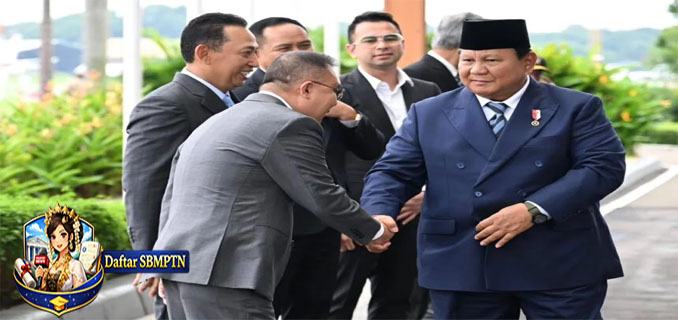
Meanwhile, public attention has also focused on President-elect Prabowo Subianto’s diplomatic move, which involved meeting with the King of England. This meeting is seen as a signal of strengthening bilateral relations between Indonesia and the UK, particularly in the areas of defense, economics, and other strategic cooperation. This meeting also reflects Prabowo’s efforts to build international communication since the beginning of his presidency.
International relations observers consider the meeting with the King of England to have both symbolic and strategic significance. The UK is one of Indonesia’s important partners in Europe, both in trade, investment, and cooperation in education and defense. Prabowo’s move is seen as demonstrating Indonesia’s foreign policy orientation, which remains active and open to global cooperation.
Furthermore, this foreign policy is also interpreted within the context of domestic politics. Prabowo’s presence at international forums is seen as part of consolidating the legitimacy of his leadership in the eyes of the world, while also conveying a message of political stability to investors and international partners. This is crucial amidst the transition of government and the ongoing regional elections in various regions.
Throughout the week, the regional elections and Prabowo’s diplomacy have dominated the public sphere, both in parliament, the media, and public discourse. These two issues reflect the complexity of Indonesia’s current political dynamics, where local democratic agendas run parallel to efforts to strengthen Indonesia’s position globally.
Going forward, the public hopes that the regional elections will proceed smoothly and produce regional leaders who are responsive to the needs of the people. At the same time, the new government’s diplomatic efforts are expected to expand international cooperation and bring concrete benefits to national development. With political dynamics constantly shifting, the coming weeks are predicted to continue to be filled with strategic issues that will determine the future direction of Indonesian politics.
Một điểm cộng lớn của slot365 login là giao diện đẹp mắt nhưng vẫn rất dễ thao tác đối với người mới. TONY06-25