
Daftarsbmptn.com – This week’s national economic news has garnered public attention after the government issued several strategic policies ahead of Ramadan and Eid al-Fitr 2026, which are expected to have a broad impact on the domestic economy. The main focus includes the Work From Anywhere (WFA) policy during Eid al-Fitr, the Eid al-Fitr Holiday Allowance (THR) schedule for civil servants (ASN), and the projected impact of this policy on the national economic cycle in the first quarter of this year.
WFA Regulations for Eid al-Fitr, Supporting Mobility and Productivity
The government has officially established the Work From Anywhere (WFA) flexible work policy, effective during the Eid al-Fitr 2026 period. This scheme allows Civil Servants (ASN) and private sector workers to work from any location during key periods during the exodus (mudik) and return (return) periods.
The WFA policy is scheduled for March 16–17 during the exodus (mudik) period and March 25–27, 2026, during the return period. The government emphasized that WFA is not a national holiday, but rather a flexible work arrangement to accommodate public mobility without disrupting worker productivity.
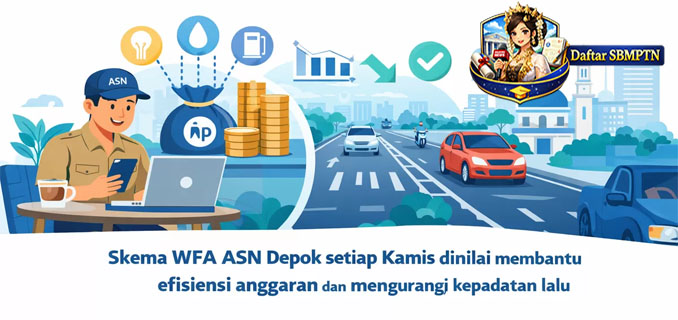
The latest infographic highlights the implementation of the five-day holiday allowance (WFA) for civil servants (ASN) and private sector workers, allowing people to better plan their homecoming trips and reduce traffic congestion.
This policy is also expected to boost domestic consumption, as workers who are not tied to the office retain their purchasing power during the long holiday period. This is seen as an indirect stimulus that supports the trade and service sectors outside major cities.
ASN THR Schedule, IDR 55 Trillion in THR Expected to be Disbursed at the Beginning of Ramadan
In addition to the WFA, the government has also ensured that THR for civil servants, the Indonesian National Armed Forces (TNI), and the Indonesian National Police (Polri) has been allocated a budget of approximately IDR 55 trillion, with a target disbursement date of early Ramadan 2026. This was announced by Finance Minister Purbaya Yudhi Sadewa as part of a series of fiscal support programs for the public.
THR, an allowance provided ahead of religious holidays, aims to help civil servants and their families cope with peak consumption periods such as Eid al-Fitr. This substantial THR budget is also believed to strengthen household purchasing power and boost consumer spending.
The early disbursement of THR (Holiday Allowance) is projected to provide additional liquidity in the domestic market, particularly for the retail, MSME, transportation, and tourism sectors, which are typically busy during the long holiday season.
Projected Impact of Policies on Economic Turnover
According to government projections, these policies are expected to strengthen national economic growth in the first quarter of 2026. The growth target of between 5.5 and 6 percent is expected to be achieved by boosting household consumption, including support from the Workers’ Fund (WFA) and timely disbursement of THR.
Economists consider household consumption to be the main driver of the Indonesian economy due to its significant contribution to Gross Domestic Product (GDP). Spending stimuli such as THR and WFA work relaxations are expected to inject liquidity into the real economic sector, including trade, transportation services, and tourism, ahead of the homecoming and Eid al-Fitr seasons.
In the context of economic growth in the first quarter of 2026, this government measure is considered strategic to maintain the momentum of domestic consumption amidst global pressures that are suppressing growth in various countries. Increased local economic activity is expected to maintain strong Indonesian economic growth.
Public and Business Response
The plan to disburse THR and WFA (Holiday Allowance) has also received a response from business owners and the general public. Many workers welcomed the WFA opportunity because it provided flexibility and helped them plan their homecoming trip without having to cut their annual leave. Meanwhile, business owners hoped that encouraging early spending by civil servants and public sector employees would increase demand for goods and services.
However, several parties also cautioned that the implementation of WFA must be effectively monitored, particularly regarding work productivity and public services. Private company management is expected to adjust internal policies to maintain efficiency during the WFA period to avoid a significant decline in work output.
Integrated Policies Boost the Economy
All of this week’s policies namely the WFA regulations during Eid al-Fitr, the disbursement of THR for civil servants, and the projection of strong economic growth demonstrate the government’s strategy to maintain the momentum of domestic consumption while stimulating the national economy. The combination of work flexibility and fiscal support is projected to strengthen household purchasing power and increase economic turnover, especially during the long holiday season.