
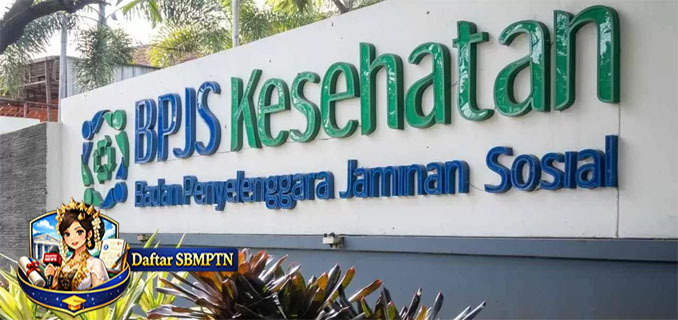
Daftarsbmptn.com – The controversy surrounding the deactivation of the membership status of approximately 11 million BPJS Kesehatan (Social Security Provider) Premium Assistance Recipients (PBI) in early February 2026 has become a hot topic in the community. Many residents expressed surprise and confusion regarding the mechanism, raising questions about whether this policy was issued on the President’s instructions or was part of an administrative data update.
This incident sparked widespread public reaction after a number of residents complained about the sudden deactivation of their membership, including patients with chronic health conditions requiring regular medical services. Some comments on social media even described the anxiety felt when kidney failure patients suddenly lost access to BPJS dialysis.
Government and Minister of Social Affairs, Not a Presidential Instruction
In response to public confusion, Minister of Social Affairs Saifullah Yusuf emphasized in a press conference that the deactivation of PBI participants was never based on a presidential instruction. This statement followed a statement by a regional head who had referred to the policy as a presidential decree a claim the Minister deemed misleading the public.
The Minister of Social Affairs explained that this measure was based on updating beneficiary data for the National Health Insurance (JKN) Program, as stipulated in Presidential Instruction Number 4 of 2025 concerning the use of the National Socioeconomic Single Data (DTSEN) as the sole reference for socioeconomic data for social assistance programs, and not as a direct measure to deactivate PBI participants.
The Presidential Instruction regulates the use of integrated data to ensure that social assistance is directed to those who truly need it, not as an order to revoke access to services for the poor. The deactivation policy was implemented based on the latest DTSEN data, which showed that a number of participants no longer met the established criteria for receiving assistance.
Updating BPJS PBI Data and SMS
The government explained that this deactivation was triggered by efforts to improve the accuracy of social assistance targeting. Several inaccuracies in PBI participant data had been discovered, with some economically well-off participants still registered as recipients, while some poor residents had not been accommodated.
The Director of BPJS Kesehatan also stated that the update was carried out through Minister of Social Affairs Decree No. 3/HUK/2026, which took effect on February 1, 2026, and was aligned with the DTSEN data. For deactivated participants, the government provides a reactivation mechanism, especially for those who meet certain economic criteria or medical conditions.
Public Reaction and the House of Representatives Speak Out
This termination of membership drew criticism from various parties. Members of Commission IX of the House of Representatives expressed concern that the action was taken suddenly, without adequate notification to the public. According to reports, the policy had a serious impact on access to healthcare services, affecting patients who depend on routine care.
Furthermore, Finance Minister Purbaya Yudhi Sadewa also highlighted the deactivation of approximately 11 million PBI participants due to the large number almost 10% of the total PBI participant quota of approximately 96.8 million which caused a shock in the community. He recommended that the data adjustment and updating process be carried out gradually to avoid surprising affected residents.
To address these concerns, the government and the House of Representatives (DPR) have agreed on strategic steps aimed at improving the governance of the National Health Insurance (JKN). These steps include providing a three-month transition period for recently deactivated participants to maintain the opportunity for reactivation and maintain access to health services in the meantime.
What Does This Mean for the Community?
The government emphasizes that PBI contributions will continue to be funded by the state, and eligible participants can reactivate their BPJS status through appropriate data verification. With a fixed national quota of approximately 96.8 million people, deactivated participants will be replaced by other citizens who meet the criteria in the latest DTSEN data.
Meanwhile, citizens who feel they have lost their rights can apply for reactivation through their local government or social services office. The government is also collaborating with the Central Statistics Agency (BPS) to continuously improve data to ensure that social assistance is targeted appropriately and does not disadvantage the poor.
The issue of deactivating 11 million PBI BPJS Kesehatan members has indeed received widespread attention, but several official clarifications indicate that this policy was not a presidential instruction, but rather part of the government’s efforts to update participant data through the DTSEN to ensure that social assistance programs are more targeted. However, its impact on society has raised a strong need for better public communication, clear reactivation mechanisms, and more thorough coordination between the central government, BPJS Kesehatan, and local governments.