
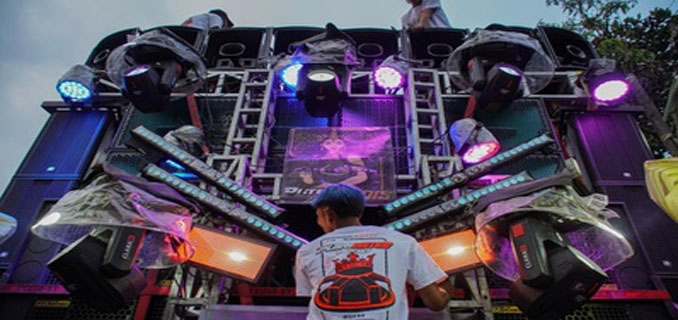
Daftarsbmptn.com – The Sound Horeg phenomenon has increasingly captured the attention of the Indonesian public in recent years. This term refers to the practice of parading large, high-powered sound systems, usually mounted on trucks or vehicles, that play music at extremely high volumes during parades, village celebrations, celebrations, or community events in public spaces. The resulting sound often exceeds 100–120 decibels and is even associated with loud vibrations that shake the surrounding environment.
Sound Horeg’s Popularity in Society
Sound Horeg itself grew out of folk entertainment traditions in rural areas, particularly in East Java, since the early 2000s. Initially, this phenomenon emerged as a form of folk entertainment during events such as weddings, carnivals, or folk festivals. The music played often includes genres such as dangdut koplo, electronic music, or DJ remixes that blend tradition and modernity in one thumping bass sound.
Over time, this phenomenon has evolved into a sound competition, with participants striving to display the system with the most powerful volume or the most shaking bass. Social media exposure has further accelerated this trend, with Sound Horeg video content widely distributed on platforms like TikTok and Instagram.
According to cultural observers, Sound Horeg can be seen as a spontaneous form of expression for people seeking affordable and lively entertainment amidst the limited availability of representative public spaces. It reflects the community’s creativity in creating entertaining and unique gathering moments.
Cultural Side: Entertainment or Local Identity?
Sound Horeg supporters view this phenomenon as part of a contemporary cultural expression born from the roots of the community itself. In certain contexts, the powerful beat of the music is seen as a symbol of community togetherness and joy. Sound Horeg festivals are often greeted with enthusiasm by residents, especially the younger generation, as a time to gather and have fun.
Some figures even call this phenomenon grassroots diplomacy, a form of citizen voice expression that challenges control of public space and creates a form of social communication that differs from mainstream culture.
kumparan
Social Issues & Controversy
However, on the other hand, Sound Horeg has sparked widespread social criticism. Many residents living near the carnival sound system have reported being disturbed by the excessively loud sound. In some cases, residents’ reports indicate physical damage to buildings due to intense sound vibrations.
This excessive noise also impacts public health. Exposure to sound above the safe threshold can cause hearing loss, stress, and even damage to the ENT (ear, nose, and throat) system. Health experts emphasize that unprotected exposure to loud noise can have long-term impacts on hearing, especially in children and the elderly.
The controversy escalated when several Islamic scholars in East Java issued a fatwa deeming Sound Horeg (haram), especially if the system’s use produces disturbing sounds, causes damage, or social practices that violate local norms.
Local governments responded to this controversy with policies regulating the use of Sound Horeg. For example, authorities in East Java established noise limits and permit requirements for the operation of these large sound systems in public areas. The goal is to balance the right to cultural expression with the need for environmental tranquility and public safety.
Divided Public Opinion
Public opinion is now divided. One side views Sound Horeg as a lively new form of creativity and cultural expression. The younger generation and music fans appreciate the thrill and excitement it offers.
However, uncontrolled loud noise has also raised concerns, both from residents seeking environmental comfort and from community leaders who believe in the need for more disciplined public space management. They believe that Sound Horeg has evolved from mere entertainment into a potential social problem that is detrimental to many parties.
Conclusion: Culture or Social Problem?
The Sound Horeg phenomenon cannot be viewed in a black and white manner. From a cultural perspective, it reflects the spontaneous expression of people seeking unique ways to gather and have fun. From a social perspective, this loud noise has triggered health problems, environmental conflicts, and controversies about cultural values.
The public and policymakers are now at a crossroads: should this phenomenon be preserved as part of the local cultural dynamic, or should it be strictly controlled for the sake of public order? The answer may lie in how Sound Horeg is wisely regulated, respecting the right to expression while protecting the rights of others to comfort and health.