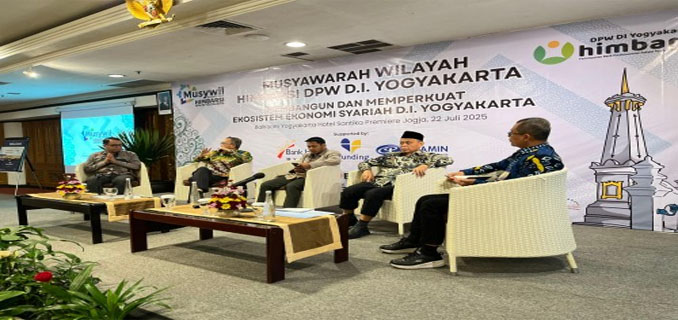
Daftarsbmptn.com – The government and economic actors continue to strengthen their commitment to realizing an inclusive and sustainable sharia economy through various innovations, collaborations, and policies that impact all levels of society in Indonesia. The concrete manifestation of these strategic efforts is increasingly visible through cross-sector synergy, ranging from government policies and collaboration with financial institutions to community empowerment programs.
The main pillar of an inclusive sharia economy is the involvement of all stakeholder government, the private sector, financial institutions, academics, and the general public to ensure that the benefits of economic growth are felt by every group, including MSMEs and community-based creative businesses. This has been a primary focus of the government and various related institutions in recent months.
One concrete example is the launch of the Islamic Creative Economy Founders Fund (ICEFF) 2025 by the Ministry of Creative Economy, which provides access to sharia financing and mentorship support to creative economy actors. This program is designed not only to encourage business growth but also to provide inclusive opportunities for entrepreneurs from various regions to develop sustainably in the digital economy era.
Collaboration and Synergy Across Sectors
Collaboration is key to realizing this vision. Various Islamic financial institutions, along with local governments and the private sector, have held strategic forums and events to strengthen synergy in the Islamic financial sector. For example, Bank Jatim’s support for the Indonesia Islamic Finance Summit (IIFS 2025), serves as a crucial platform for expanding networks and fostering innovation and synergy within the Islamic financial ecosystem.
Furthermore, the Financial Services Authority (OJK) is actively expanding Islamic financial literacy and inclusion through various activities, such as the 2025 Islamic Financial Expo and Seminar (EKSiS), as part of its efforts to promote public welfare through empowering MSMEs and Sharia-based financial education. This step is considered crucial for reaching communities currently excluded from the formal financial system.
Furthermore, the younger generation is also encouraged to become key drivers of the future Islamic economy. Bank Indonesia emphasizes the importance of their role in strengthening the ecosystem through creative thinking, the use of digital technology, and community empowerment as the basis for inclusive and sustainable economic growth.
Innovation as the Key to Development
Innovation is a crucial factor in the Islamic economic agenda. At the global level, the topics of financial inclusion and digital transformation continue to be intensely discussed in international forums, including the 19th IsDB Global Forum on Islamic Finance, which explored innovative strategies to expand Sharia-compliant financial inclusion. These discussions not only provide new insights but also open up opportunities for cross-border collaboration.
Innovative approaches are also emerging in the design of new financial products that support Sharia principles while still meeting the needs of modern society. For example, the use of Sharia-based financing schemes, developed in collaboration with UNDP Indonesia, aims to increase access to financing for productive businesses that align with the values of justice and economic sustainability.
National Policy and Strategic Plan
Policy-wise, the Indonesian government has emphasized the direction of Sharia economic development through various strategies, including strengthening regulations, halal certification, and integrating Sharia principles into national development programs. The Coordinating Minister for Economic Affairs emphasized the importance of collaboration between the Sharia financial sector, the halal real sector, and Islamic social institutions to create a sustainable, inclusive ecosystem.
These efforts are also strengthened by national programs such as LENTERA EMAS (Sharia Economic Literacy and Inclusion towards a Golden Indonesia), which emphasizes literacy and inclusion to support Indonesia’s future as a global center for the sharia economy. This policy aligns with national development priorities oriented toward public welfare and long-term economic stability.
Future Hopes and Challenges
Although various initiatives are underway, challenges remain, particularly in ensuring the penetration of the sharia economy into remote areas and bridging the gap between urban and remote areas. Sustainable collaboration between the government, industry, and the community is key to ensuring that the principles of sharia economics, which focus on fairness, the distribution of benefits, and sustainability, are truly felt by all levels of Indonesian society.
Đăng ký tài khoản tại xn88 cực kỳ đơn giản, chỉ mất chưa đầy 30 giây là bạn đã có thể bắt đầu hành trình chinh phục giải thưởng. TONY04-14H
Bài viết rất phù hợp với nhu cầu của tôi 188v đăng nhập TONY06-10